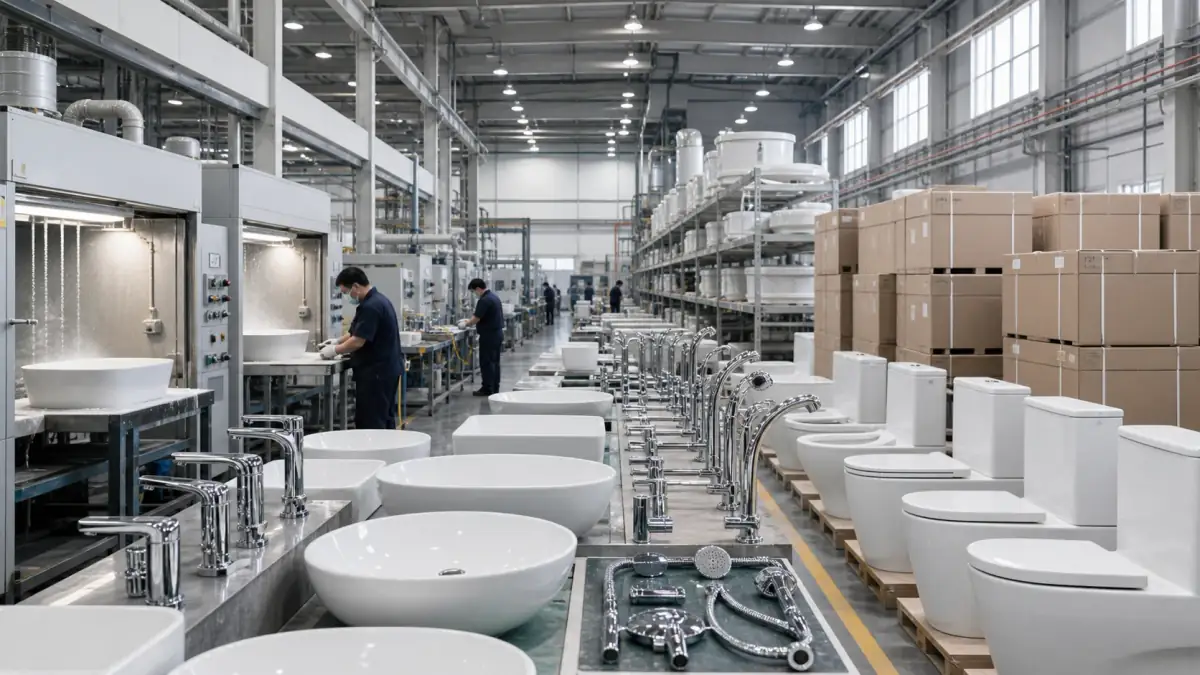
China's bathroom equipment industry comprises 438 active exporters, concentrated in three major manufacturing hubs. Taizhou (Zhejiang) leads with 51 exporters, specializing in sanitary ware, faucets, and shower systems. Hangzhou (26 exporters) excels in high-end designs and smart bathroom technology, while Tangshan (Hebei) with 22 exporters is a key cluster for ceramic products like toilets and basins. These clusters benefit from proximity to raw material suppliers—ceramic clay in Hebei and metal fittings in Zhejiang—and established supply chains that reduce production costs.
B2B cost advantages stem from economies of scale, skilled labor, and integrated manufacturing ecosystems. Raw materials like stainless steel, brass, and ceramics are locally sourced, minimizing import expenses. For shipping, exporters near Ningbo Port (Zhejiang) and Tianjin Port (Hebei) offer efficient logistics to global markets, with sea freight remaining the most cost-effective option for bulk orders. Consolidation services in these clusters simplify containerization and reduce per-unit shipping costs.
Procurement checklist: (1) Verify exporter certifications (ISO, CE, or CUPC) for compliance with target market standards. (2) Request samples to assess quality and finish, especially for ceramic and electronic components. (3) Negotiate MOQs based on cluster capacity—Taizhou factories often offer flexible minimums. (4) Arrange third-party inspections during production. (5) Confirm shipping incoterms and lead times, leveraging proximity to major ports for faster delivery. By tapping into these clusters, buyers gain competitive pricing, reliable quality, and streamlined logistics.